Signal.
eCMR · Electronic consignment note

The eCMR: the electronic consignment note for road transport

Replace paper CMR with an electronic consignment note signed, time-stamped and shared in real time. Less paperwork, faster invoicing and internationally recognized legal value.

No obligation · Data hosted in France · Compliant eCMR

ROI simulator · free

How much can eCMR bring you?

Enter your activity and estimate in two minutes the annual gain from switching to eCMR: costs avoided, cash flow freed and time saved.

  1. 1
  2. 2
  3. 3

Your activity

Some figures about your activity to estimate your potential gain with a TMS and eCMR.

Step 1 to 3 · your entries are retained

What you really get back

  • Direct costs eliminated

    Purchasing, printing, mailing and archiving CMR paper disappears — each transport costs less.

  • Cash flow and profitability

    By invoicing as soon as transport is completed, you collect faster; the freed capacity is transformed into additional margin.

  • Opportunity cost

    Waiting times proven and finally invoiced thanks to time stamping, disputes better defended, fewer forgotten invoices.

  • Administrative productivity

    Less re-entry and reminders on the operational and invoicing side: your team concentrates on the essentials.

Indicative estimate, based on prudent and transparent assumptions. Receive the full details by email.

8 min
saved by transport, no more paper management
6 000 €
cash flow per vehicle by charging earlier
0 losses
all your documents centralized in one place
400+
paper documents saved per driver per year

What is a eCMR?

The eCMR (or e-CMR) is the electronic version of the consignment note defined by the Convention CMR, which governs the contract for the international carriage of goods by road. It is the document which accompanies each shipment and which is authentic between the sender, the carrier and the recipient.

Thanks to the additional protocol to the Convention CMR, the electronic consignment note benefits from the same legal value as its paper equivalent: reliable electronic signature, data integrity, timestamping, traceability and archiving. You can use it today, in France and internationally.

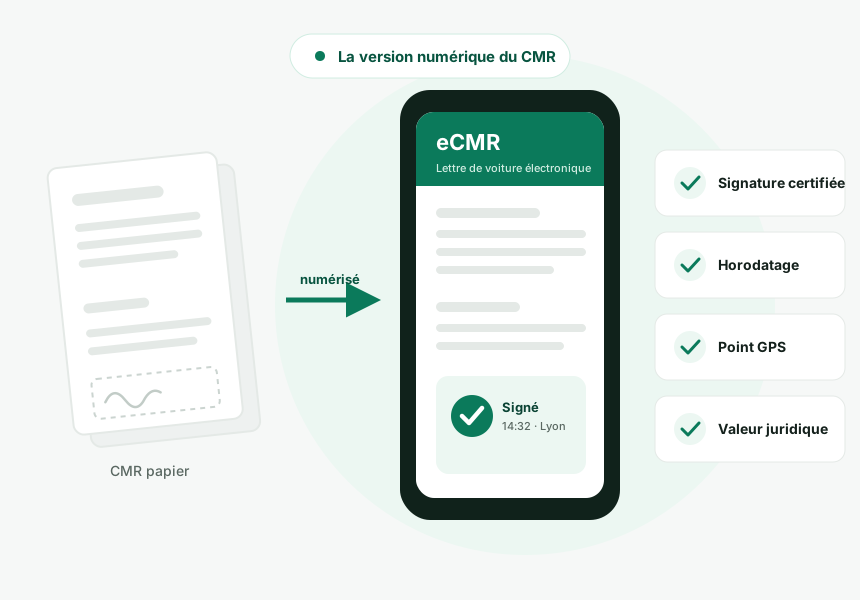
From CMR paper to eCMR: the paper consignment note becomes an electronic document on mobile, with certified signature, timestamp, GPS point and legal value.

CMR paper costs you a lot

Buy, store, retrieve, decipher, sort, send, archive: paper accumulates friction at every step — wasted time, stress and avoidable risks.

Delays, friction and costs

Buy the bundles, store them, collect them from the drivers, decipher the paperwork, sort them, send them (sometimes by post) then archive them. And the constant risk of losing one.

Billing that gets bogged down

Until the signed CMR comes back, you don't charge. Cash flow under pressure, risk of forgetting and non-invoicing, entry errors and blurred vision of the activity.

Information blocked

Between the driver and the operation, between the company and its customers: information circulates slowly. Collecting and sharing proof of delivery takes time and degrades satisfaction.

With eCMR Signal, everything happens on mobile

The mission automatically goes to the driver. It completes, signs and transmits the waybill in real time — without a sheet of paper.

Mission sent automatically

The transport order and the eCMR arrive directly on the driver's phone.

Reserves for loading and delivery

The driver notes the useful reservations at each stage, supporting photos.

Certified electronic signature

Driver and customer sign upon loading and arrival, on the screen.

Media exchanges

Pallets delivered, pallets taken back: the exchange of supports is traced.

Timestamp and GPS points

Each step is dated and geolocated – enough to cover you in the event of a dispute.

Platforms for your partners

Orderers, senders and recipients follow the transports and documents that concern them.

How does it work?

From creation to customer follow-up, everything comes together automatically. You keep control, the application does the rest.

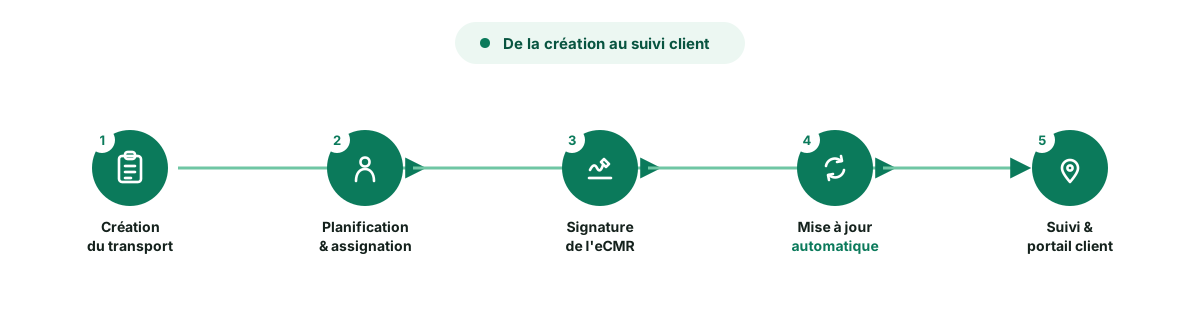
Infographic of the journey of a transport in the application, in five steps: creation of the transport by the administrator, planning and assignment to a driver, signature of the eCMR by the driver, automatic updating of the statuses, then live monitoring, notifications and customer portal.
  1. 1

    Creation of transport

    The administrator enters the transport order and all its information in just a few clicks.

  2. 2

    Planning and assignment

    Assign transportation to a driver; the mission is sent to him automatically.

  3. 3

    Signature of eCMR

    The driver signs electronically upon loading and delivery, reservations included.

  4. 4

    Automatic update

    The status of the transport advances on its own through the stages — without any re-entry.

  5. 5

    Tracking, notifications and customer portal

    Live position, automatic alerts and dedicated access for your customers.

What you gain

  • A significant reduction in paperwork
  • Better traceability of goods
  • Faster exchanges of information between all parties
  • Fewer human errors related to paper documents
  • More transparency, particularly for authorities during road checks
  • Accelerated invoicing that relieves cash flow

eCMR, eFTI: what the law says

Many believe that eCMR becomes mandatory in 2026. This is false. Here's what's really changing — and why you can safely adopt it now.

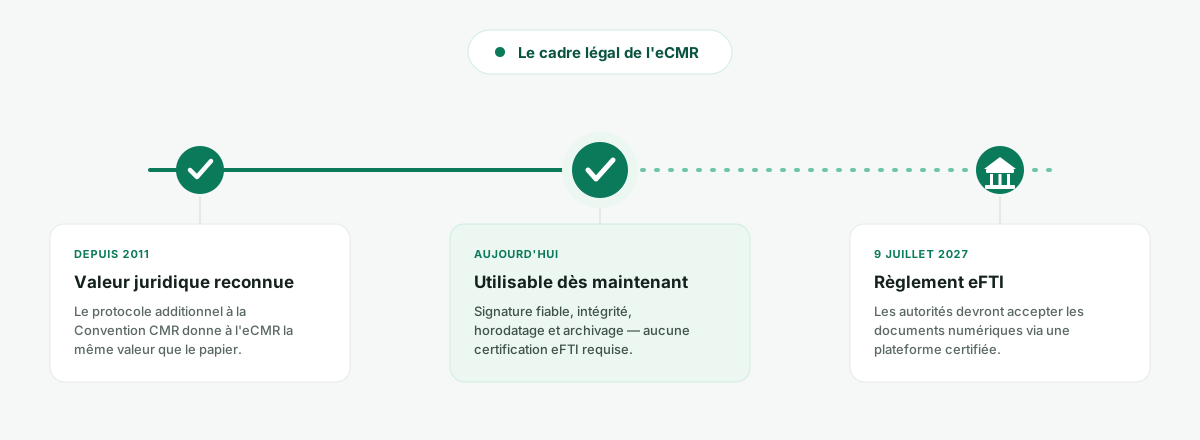
Timeline of the legal framework of the eCMR: since 2011, the additional protocol to the Convention CMR gives it legal value; the eCMR can be used today; By July 9, 2027, the eFTI Regulation will require authorities to accept digital documents.

The eCMR already has legal value

The eCMR falls under the additional protocol to the Convention CMR, in force at the international level since 2011, to which France is a party. It is he who gives legal value to the electronic consignment note between the parties to the contract (sender, carrier, recipient). What matters: reliable electronic signature, data integrity, timestamping, traceability and archiving. You can therefore use a eCMR tool that is legally valid today, without eFTI certification.

eFTI concerns States, not carriers

The European eFTI (Electronic Freight Transport Information) regulation does not oblige companies: it requires Member State authorities to accept regulatory transport information in digital form, via a certified eFTI platform. From July 9, 2027, national authorities will have to accept cargo documentation in electronic format. The change is aimed at states, not your business.

France and the eFTI platform

In France, the IN Groupe (Imprimerie Nationale) is developing the eFTI platform (“eFTI Gate”), a national access point to transport data for verification by the authorities. All solution publishers eCMR will have to guarantee the compatibility of their systems with this platform, to ensure interoperability with the national system. We design Signal to be ready when the time comes.

Frequently asked questions about eCMR

Will eCMR be compulsory in 2026?

No. In 2026, no obligation weighs on carriers: the CMR paper remains valid. What is changing is that EU member states need to prepare for the eFTI Regulation. eCMR remains a choice — but one that saves time and money today.

Does the eCMR have legal value?

Yes. Thanks to the additional protocol to the Convention CMR (in force since 2011, ratified by France), the electronic consignment note has the same legal value as paper, as long as it guarantees a reliable signature, data integrity, timestamping, traceability and archiving.

What is the difference between eCMR and eFTI?

The eCMR gives legal value to the electronic consignment note between the parties to the contract. The eFTI requires Member State authorities to accept transport information in digital format via a certified platform, from July 9, 2027. One concerns the document, the other concerns controls by the authorities.

Is eCMR recognized during roadside checks?

As eFTI platforms are rolled out, national authorities will accept digital transport documents as legal evidence, just like paper. As of today, the timestamp and GPS points of the eCMR Signal constitute solid evidence in the event of a dispute.

Can my customers and partners access eCMR?

Yes. Orderers, senders and recipients have their own access to follow the transports that concern them and consult the documents (delivery tracking and proof), without exchange of emails or paper.

How much time do we save with eCMR?

On average, around 8 minutes per transport by eliminating paper management, and up to €6,000 in cash per vehicle by invoicing as soon as the transport is completed. Our ROI simulator gives you an estimate adapted to your fleet.

Can't find your answer?

Ask your question: our team will respond quickly by email.

Ready to switch to electronic consignment notes?

Create an account to test the entire beta for free — or join the waiting list to take advantage of the founding price.

Déjà 1 364 registered in the queue